
In this article

Geopolitical instability, expanding regulation and rising investor pressure are reshaping board oversight — even as boards are being asked to do more with the time they already have. Together, these forces sharpen the business case for board management software.
PwC's 2025 Annual Corporate Directors Survey found that 55% of directors say at least one board member should be replaced, a sign that boards themselves are losing patience with anything that wastes director time, including the manual prep cycles a strong board management platform is built to fix. For corporate secretaries, general counsel and governance leaders, the question is no longer whether to adopt board management software but how to win approval to do it within the budget and headcount available.
A strong business case maps current costs and risks, quantifies ROI, compares options against the status quo and translates the value into language each approver responds to — the CFO sees payback, the CIO sees consolidation, the GC sees defensibility and the board chair sees better discussion.
Here's what we'll cover:
Board management software is a secure, centralized platform supporting the full meeting lifecycle: agenda and pack creation, distribution, voting, eSignatures, minutes, action tracking and audit trails. The audience extends beyond directors. Corporate secretaries and governance leads run the prep cycle, general counsel and compliance teams manage legal exposure, and IT leaders own sensitive data flows.
Today's platforms also embed AI to compress the most labor-intensive parts of the cycle: first-draft board books, automated review of risky language, suggested discussion questions and AI-generated minutes drafts.
A credible business case usually mentions a baseline feature set, so reviewers know what they're approving:
The harder question is when manual processes have outgrown their usefulness.
An effective board is the product of myriad people, processes and data points. The more efficient each of those pillars is, the better they coalesce to provide the board with the right support and insights at the right time. While manual management may work for a while, many organizations outgrow it.
How do you know when it's time to move away from manual processes to a software solution? Look for:
Preparing meeting materials can be a massive time drain. Some administrators estimate spending as many as 50 hours per quarter simply prepping for board meetings. If you notice mounting inefficiencies, frustrations and resource wastage leading up to board meetings, it is time to start building a business case for board management software.
Transition to a software solution when manual processes in M&As, such as funding rounds and IPOs, lack strong security measures. Without strong security measures, you're at risk of litigation due to inadequate due diligence. Using software with strong encryption, permissions for different groups and detailed audit trails can greatly reduce human errors and unauthorized access to sensitive information. This will protect the integrity of the transaction process.
Boards need instantaneous access to critical information. Board management software can make the difference if your board regularly lacks the information it needs or doesn't know where essential documents and financial reports are stored. Centralized, real-time access to essential insights helps directors make quicker, more informed decisions.
Regulatory requirements are complex and ever-changing. The potential legal and financial consequences are damaging, but it's easy to make errors when managing board materials manually. Board management software is vital if your compliance tracking becomes too complex.
Boards disengaging between meetings may miss opportunities to solidify the organization's competitive edge. If you notice board members are difficult to reach or slow to collaborate, introducing software can boost engagement. Integrated communication tools and real-time updates foster stronger involvement from all board members.
Each of the five signals above shares a root cause: manual processes absorbing time and attention that should go into governance, not administration. AI-powered platforms address this at the source: Smart Builder generates first-draft board books from multiple source files, and Smart Book Summary condenses 100-page packs into focused briefings administrators no longer have to write by hand. On the post-meeting side, Smart Prep Insights surfaces tailored discussion questions for each director and Smart Minutes drafts initial meeting minutes from notes, redirecting administrator effort from mechanical assembly to higher-value governance work. Boards AI brings these capabilities together inside a single platform.
As Jim Myers, Deputy General Counsel, Corporate Governance at Fannie Mae, puts it: "We show up, we attend meetings, we read the materials before the meetings, and we come prepared to ask questions and think of things through a strategic standpoint." That bar is hard to clear when materials sit in scattered emails and drives.
Understanding the benefits of board management software is key to creating a compelling business case. Boards want to know what they stand to gain by investing in software.
While board efficiency, security and effectiveness are all common outcomes of using board management software, your organization can also expect the following.
More straightforward meeting preparation is one of the most immediate benefits of board management software. Administrators will no longer spend hours compiling documents, creating agendas or distributing materials.
Board management software automates these processes, allowing administrators to organize and send materials to all board members quickly. This saves time, reduces errors and fosters more productive meetings.
Boards handle an immense amount of confidential documents and data. These require nothing short of strict security measures that can be difficult to implement manually, especially if your board still communicates over email or text.
With board management software, documents, data and messages are encrypted, protecting confidential information from unauthorized users. Additional measures like role-based permissions and audit trails add a layer of security that offers even more peace of mind for board administrators and directors alike.
Boards often need to make decisions quickly. Even if members are at-the-ready, though, they may be hindered by a lack of accurate, up-to-date information.
Board management software centralizes information that may otherwise be scattered. Directors can tap into a single platform to view and annotate essential documents in real-time from any device. This immediate access to information leads to the swift decision-making the modern business landscape requires.
Compliance isn’t a task for the faint of heart. Maintaining compliance with various regulations is one of the board’s key responsibilities. Board management software makes it easier.
Board members can receive automatic updates on regulatory changes and ensure that all documents and data are handled appropriately, reducing the risk of non-compliance. Board management software also creates the accurate and thorough records boards need to withstand audits and legal reviews.
Board members often struggle to engage between meetings. This is due as much to their busy schedules as it is to their lack of ability to communicate and collaborate effectively.
Board management software engages the board through ongoing collaboration, notification and discussion tools. Instead of relying on fragmented, easily buried email chains, board members can engage in real-time on a single platform. This makes board activities more efficient and promotes a proactive board culture, leading to better outcomes for the entire organization.
AI capabilities have moved from a nice-to-have to a core differentiator in this category. Diligent Boards is the only AI-powered board management software directors ask for by name, and its purpose-built AI absorbs the most labor-intensive parts of the cycle:
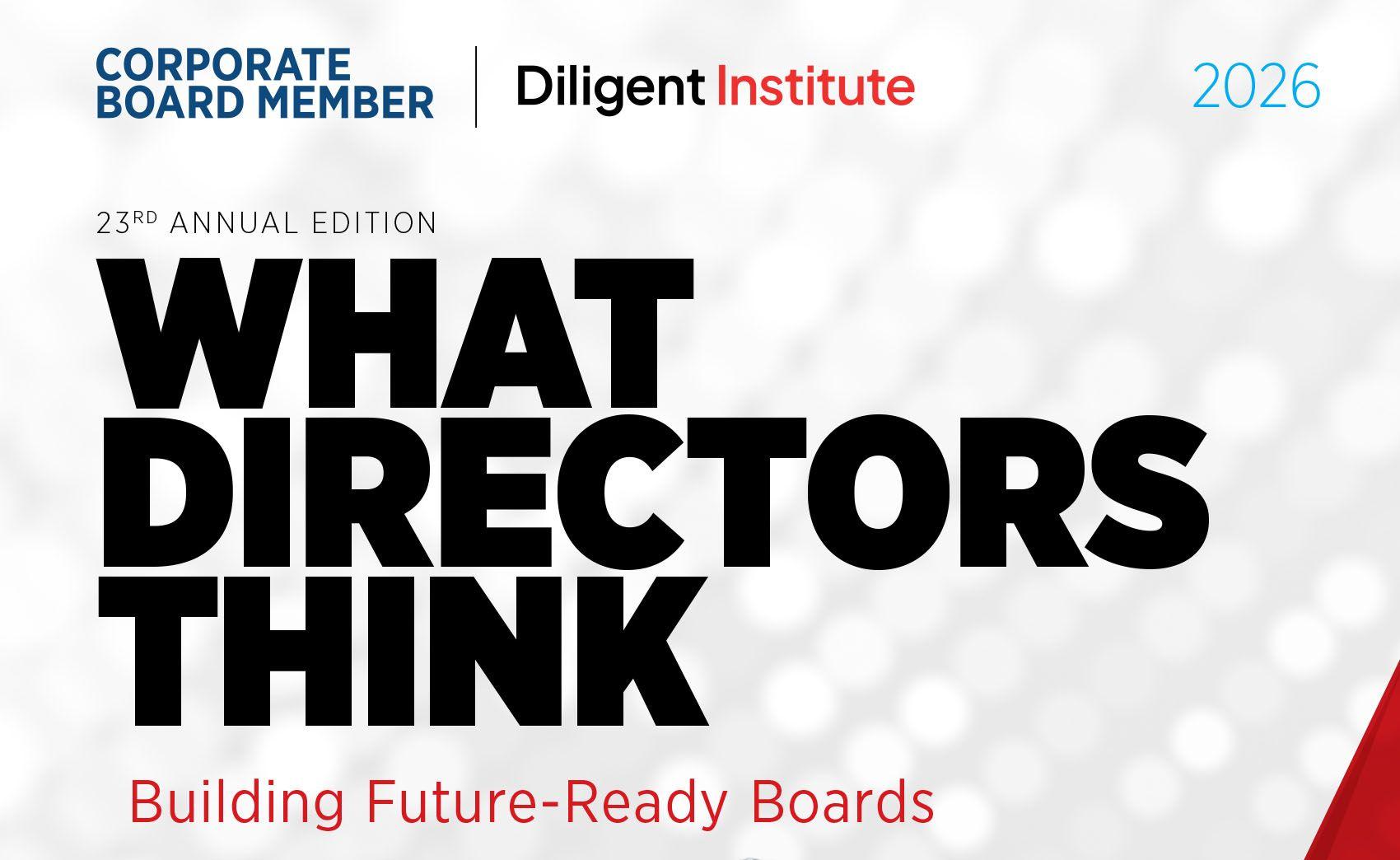
Diligent Institute's What Directors Think 2026, conducted with Corporate Board Member, found that 58% of directors want less time on management presentations and more on strategic discussion. AI shrinks the prep load that crowds out the value of a powerful board.
"The board fundamentally has to trust management. There are lots of ways the board trusts but verifies. Trust starts with communication. Communication is successful when it's proactive, when it anticipates," says Inna Barmash, Chief Legal Officer & Corporate Secretary at Amplify. Software makes anticipatory communication possible at scale.
While board management software requires an up-front investment, it often pays for itself in the long run. Automating tasks reduces the manual labor involved in board activities, which cuts down on administrative costs.
At the same time, improved decision-making and governance lead to fewer delays and more effective use of board members’ time, yielding additional productivity and resource optimization.
The private-company business case guide includes templates, benchmarks and approver scripts you can adapt.

Board management software has countless benefits, but it also brings added costs. Calculating its true return on investment (ROI) requires assessing the cost of acquiring and implementing the software and determining the quantifiable benefit it offers your organization.
FirstRand conducts upwards of 600 meetings annually between its main board and all its subsidiaries. This demanding schedule requires more than 8,700 individual board packs for directors.
By adding up the time spent on each pack and multiplying it by the labor cost, FirstRand determined it spent almost $US 1.5 million per year on board packs. After adopting Diligent Boards, part of the Diligent One Platform, the company reduced costs by 50%, even after accounting for software licensing fees, implementation and training.
Build a side-by-side view of where time and money go today versus what changes once the software is in place.
At its simplest:
ROI = (annual savings − annual software cost) ÷ annual software cost
Build savings up across staff time, materials, IT support and audit-and-legal effort, then add a conservative estimate for risk-mitigation value (the cost avoided when audit trails and controlled access prevent issues from escalating).
Finance reviewers care less about year-one savings than about cumulative payback, so build the same model across years one through five.
AI features push these ROI numbers further than traditional portals. Boards AI further reduces prep time, helps directors digest complex information faster and minimizes the need for additional headcount, while Smart Minutes alone can absorb hours of manual drafting per cycle.
Independent Total Economic Impact™ analysis from Forrester shows that organizations can cut meeting prep time by around half, save thousands of hours over several years and reduce risk-related costs when they modernize with dedicated board software..
A common reason cases stall is comparing software to nothing. Reviewers want the full spectrum laid out: status quo, generic collaboration tools and a dedicated platform side by side.
Most internal cases are reviewed against eight components. The outline below is generic, so adapt the section weighting and naming to the templates your organization already uses. For a longer-form version you can copy from, see Diligent's business case whitepaper:
A well-structured document still has to land in the room. The next step is presenting it.
Presenting a business case for board management software can feel daunting. Many organizations are attached to the way they have always done things. However, with clarity, data and attention to your board's specific needs and priorities, you can drive decision-makers to act. Here's how:
Before the case lands in front of approvers, run it through this checklist.
"Trust is the number one thing. Once you have trust that the executive teams believe in the data, believe in the risk you are identifying, then you can have fulsome conversations, you can create change," says Tom Keaton, Vice President, Business and Product Strategy at Diligent. The numbers in your business case will only land as well as the credibility behind them.
Before you take the case to approvers, walk through this checklist:
Three examples show what these gains look like in practice.
Here is a case study you can use to help make your business case for board management software:
CRICO insures all Harvard medical institutions and their affiliates. However, it relied on disjointed digital and manual processes that were resource-intensive and presented security challenges. It also struggled to store data for each search and reference.
The compliance program manager led the initiative to strengthen the company's security and compliance while also digitizing board management processes.
They improved governance, maintained strict compliance and eliminated thousands of printed pages and hundreds of hours of labor yearly.
Flexco, a global manufacturer with customers in over 150 countries, faced quarterly board pack volumes regularly exceeding 100 pages and last-minute changes that triggered full reprints. After moving to Diligent Boards and Diligent Data Rooms, the team eliminated days of printing, collation and shipping each cycle and shifted that capacity into longer-horizon governance work. The case illustrates how a unified platform can collapse parallel workflows (board collaboration and deal content) into one secure environment.
At one large financial services group, the corporate secretary applied Smart Book Summary and Smart Prep Insights to 100+ page quarterly board packs. Directors arrived with sharper questions, the average pre-read time fell by more than half and the executive team reported deeper, more strategic discussion in committee meetings. The case mirrors what the Forrester TEI study describes at scale: AI-assisted prep does not just save hours, it changes what directors do with them.
"Looking ahead, high performing boards will treat governance as a continuous discipline, built on real time data flows rather than periodic reports. And they will increasingly rely on integrated digital platforms, and over time AI-driven analytics, to surface patterns, flag emerging risks and point directors to where their judgment is needed most, while keeping human decision-making firmly at the center," says Dottie Schindlinger, Executive Director of Diligent Institute. Choose a platform built for where governance is going.
The Smart Builder, Smart Book Summary, Smart Prep Insights and Smart Minutes capabilities described above sit inside Diligent Boards,on enterprise-grade security infrastructure with role-based permissions, granular access controls and full audit trails; the elements that the CIO and CISO will scrutinize before approving a platform that handles board-sensitive material.
Smart Risk Scanner adds a controlled review layer over draft materials before publication, flagging legal, regulatory or reputational red flags so the GC's standards are enforced systematically rather than by spot-check.
Beyond the meeting cycle, the platform extends the business case in three directions that often determine whether the case wins approval at all.
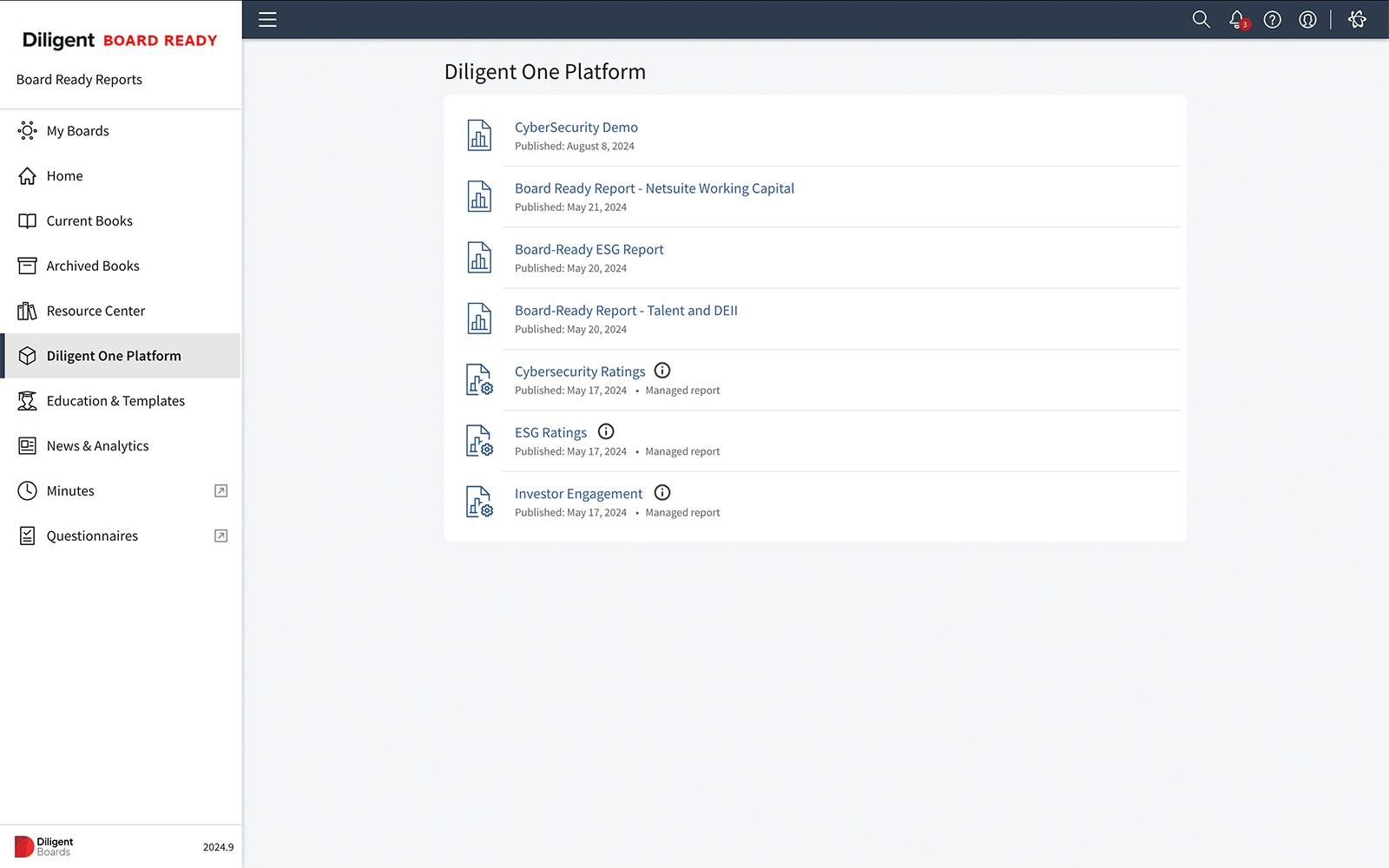
For evaluators who want to compare features against specific scenarios, the board portal buyer's guide walks through feature checklists, vendor questions and selection criteria built specifically for governance buyers.
For corporate secretaries, general counsel and governance leads, naming the inefficiencies is the easy part. You can already see the 50-hour prep cycles, the late-night version-control fixes, the directors who arrive having read three of eight items, the audit trails with quiet gaps in them. Getting all of that into a document that a CFO will fund, a CIO will clear on security grounds, a GC will stake their name on and a board chair will actually champion is the part that stalls most cases. Each of those four people needs a different version of the same argument: the CFO needs a multi-year payback model, the CIO needs governance-grade AI and consolidation, the GC needs stronger audit trails and the chair needs a clearer link between the platform and better board discussion
What this guide has tried to give you is the framework that holds those four arguments together. The pain points become quantified line items, the AI capabilities become specific multipliers on the existing ROI, the options matrix shows reviewers the full spectrum rather than software versus nothing, the document outline mirrors the templates approvers are used to reading and the checklist gives you a final pre-flight pass.
The case stops being a request for budget and starts being a defensible analysis of what continuing with the status quo actually costs. That shift is usually what turns a good case into an approved one.
Approvers sign off faster once they can see the platform in their own terms. Schedule a Diligent Boards demo and walk through the governance moments you're trying to fix.
It's the internal document used to win approval for investing in a board management platform. A complete case quantifies current costs and risks, models expected ROI, compares the status quo with alternatives and tailors the value to financial, IT, legal and board approvers. Most strong cases organize the value around three core pillars: efficiency (staff time, prep cycles, materials), security and compliance (controls, audit trails, defensibility) and board effectiveness (better-prepared directors, sharper discussion, stronger oversight).
Estimate annual savings across staff time, materials, IT and audit and legal effort. Subtract the annual software cost from total annual savings, then divide by the annual software cost. Build the same view across three to five years to capture cumulative payback.
Pricing is usually driven by user count, feature scope and AI capability. Free or low-end tools exist but typically lack the security controls, audit trails and AI features regulated organizations need, and they create hidden costs of their own.
AI compresses the most labor-intensive parts of the meeting cycle: board book drafting, summarization, risk scanning, discussion-question generation and minute drafting. Learn more on the Diligent Boards AI page.
Yes, although the value drivers differ. Private companies typically build the case around transaction readiness, investor expectations and professionalizing operations. Diligent's
private-company business case guide and public-company business case guide cover the model in more detail for each.
Pair this article with Diligent's board portal buyer's guide for vendor evaluation criteria and feature checklists, and with the independent Forrester Total Economic Impact™ analysis for benchmark data on time savings and risk reduction. Combined with the private-company and public-company business case guides, you have templates, benchmarks and selection criteria for every reviewer your case will pass through. Make your case stronger. Request a Diligent Boards demo today.