
AI is no longer an experimental technology. It is embedded across the organisation, shaping products, operations, customer interactions and even the information boards rely on to govern effectively. As a result, AI assurance has moved firmly into the boardroom, requiring directors to translate complex technical risk into clear, confident decisions.
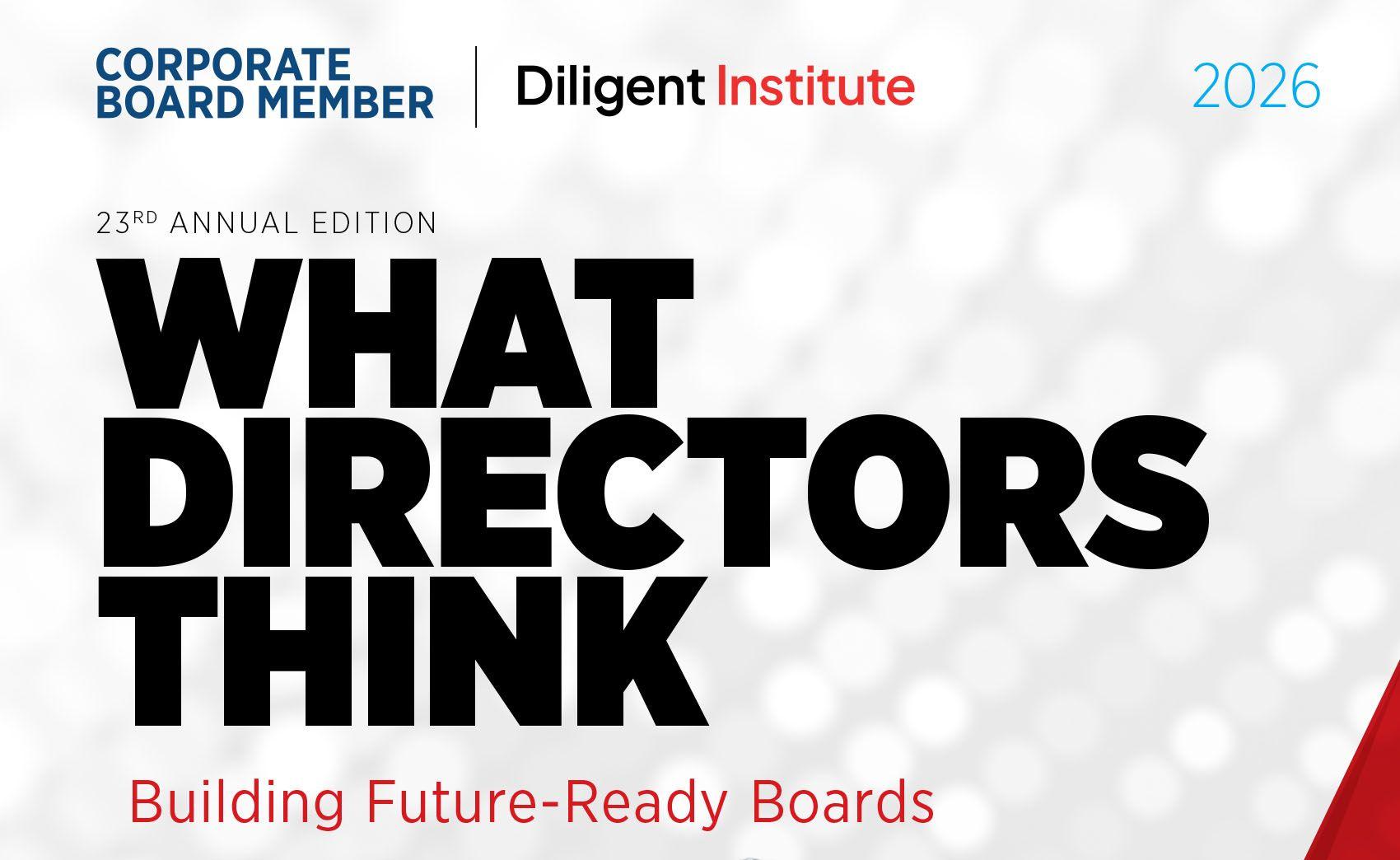
Yet many boards are being asked to do so without the foundations in place. According to Diligent Institute's What Directors Think 2026 report, 60% of legal, compliance and audit leaders cite technology as their top risk concern, but only 29% of organisations have comprehensive AI governance plans. At the same time, board-level expertise remains limited: just 8% of directors report strong AI knowledge, while 40% say rapid technological change is the most challenging issue to oversee.
That gap is where assurance matters most.
Boards do not need another dense technical update on models, prompts or architectures. They need clear, credible, board-ready insight: where AI is being used, what could go wrong, whether controls are working and what decisions management needs from them next. For internal audit and risk leaders, that means translating complex AI risk into oversight language directors can actually use.
AI is now core to strategy and governance, not just a technology topic. When AI influences material processes, decisions or exposures, directors are expected to understand how management governs it and whether the organization’s controls are fit for purpose.
That expectation is being reinforced by regulation. The EU AI Act entered into force in August 2024, with obligations phasing in over time, and high-risk AI requirements becoming mandatory in August 2026. The Act classifies AI systems into unacceptable, high, limited and minimal risk categories, with stricter obligations for higher-risk use cases. For providers and deployers of high-risk AI, those obligations include risk management, data governance, transparency, human oversight, documentation and ongoing monitoring.
In practice, AI governance can no longer be handled as an informal side project. Boards need evidence that governance is real, not just documented. As Keith Enright, VP and Chief Privacy Officer at Google and Board Director at ZoomInfo, notes, boards need to apply the right level of governance pressure to whoever oversees the AI landscape, the risk exposure, the disruption and the opportunity.
Get AI Act ready fast
See what applies, classify risks and document compliance before gaps turn into problems.
Directors are not asking for more jargon. They are asking for clarity.
They need:
As Diligent’s AI governance guidance makes clear, boards should ask practical questions: Where does the data come from? Has the model been validated? How is bias being tested? Can decisions be explained? What ethical guardrails are in place?
Those are not technical questions. They are governance questions.
This is where internal audit becomes indispensable.
The Institute of Internal Auditors positions internal audit as a key player in AI governance, providing independent assurance that AI risk and control frameworks are robust, regularly updated and effectively implemented across the organization. That includes evaluating AI decision-making processes, data quality controls and algorithmic bias assessments.
The role of internal audit is also evolving quickly, creating both opportunity and new exposure. Auditors are increasingly expected to scrutinize data provenance, model validation, bias testing, explainability, risk assessments and ethical guardrails for deployment and monitoring, which are also questions a board will focus on.
In other words, with respect to AI, internal audit is no longer just checking whether a process exists. It is translating technical AI risk into the language of oversight, assurance and fiduciary duty.
That shift is already underway. Diligent’s recent highlights of the use AI in internal audit shows teams using AI to automate control testing, detect fraud in procurement data and expand audit coverage with continuous analytics.
The most useful AI assurance programs do not overwhelm directors with technical detail. They convert AI risk into a repeatable board process.
A practical approach has four steps:
This maps well to broader governance frameworks. The NIST AI Risk Management Framework, for example, provides a practical structure through its four core functions: Govern, Map, Measure and Manage. For multinational organizations, that can be especially useful alongside the EU AI Act: NIST offers a flexible operational model, while the Act sets binding legal obligations.
If the goal is better board oversight, reporting format matters as much as reporting content.
Good board-ready AI reporting should use plain language, avoid unnecessary technical jargon and favor visuals over text. It should show, in one place:
That is what makes reporting board-ready: not just describing risk, but framing the decision.
One of the biggest changes in audit and assurance is timing.
Traditional, backward-looking audit cycles are increasingly too slow for AI-related risk. Continuous risk monitoring offers an alternative: an automated, real-time approach that uses AI and analytics to evaluate business processes, transactions and controls on an ongoing basis. Instead of asking what happened last quarter, teams can ask what is happening now, update their annual risk assessments and deliver more impactful, timely findings.
That shift is also visible in skills and tooling. In the IIA’s 2025 North American Pulse survey, 78% of chief audit executives said data analytics was their teams’ most needed competency improvement. At the same time, we are seeing audit teams reducing management time by nearly 70% and cutting audit-cycle admin from roughly 120 hours to about 34.
That is not just an efficiency play. It is an assurance play. When findings can flow into enterprise risk posture and board reporting faster, governance becomes more responsive.
For EU audiences, the compliance starting point is clearer than it is in the U.S.
The EU AI Act provides a prescriptive framework with defined risk categories and explicit obligations for providers and deployers. That gives assurance teams a more concrete benchmark for evaluating governance effectiveness and control design.
By contrast, the U.S. remains more fragmented. That makes principles-based frameworks like NIST AI RMF especially influential for organizations trying to impose structure on a less centralized regulatory landscape.
For global organizations, the takeaway is straightforward: the legal environments may differ, but the board needs do not. Directors still need credible evidence on use, risk, control effectiveness and accountability.
If you want to make AI assurance board-ready, start with the basics:
Success looks like directors who can explain where AI matters, what could go wrong, what is being done about it and what decisions the board needs to make next.
That is the real goal of board-ready AI assurance.
If you’d like to speak with a Diligent Audit specialist about strengthening audit assurance, governing AI risk and preparing for the EU AI Act, connect with our team today.
From AI talk to real impact: How today’s leaders do more without adding headcount
Unlock the potential of AI in governance, risk, and compliance with our comprehensive guide. Learn how to streamline workflows, enhance reporting efficiency, and build a robust AI action plan while maintaining control and accountability. Download now to elevate your organization's AI oversight and drive measurable impact.
AI action plan worksheet for GRC leaders
Unlock the potential of AI in governance, risk, and compliance with this practical 90-day action plan worksheet designed for GRC leaders. This guide helps you assess AI maturity, prioritize use cases, and establish essential guardrails, ensuring a structured and accountable approach to AI implementation in your organization. Download now to transform AI discussions into a clear, actionable strategy.