If the board of directors is the brain, board reporting is the eyes: a goal-oriented look at business or organizational activities and broader industry conditions.
A board report is a structured document that gives directors the financial performance, risk exposure and strategic progress data they need to make informed decisions, typically 10 to 20 pages, prepared by practitioners and guided by the C-suite.
Reporting quality is a live challenge: according to the GC Risk Index 2026 by Diligent Institute, only 21% of senior legal leaders are very confident their board receives the right mix of information on risk. Platforms like Diligent One connect the data behind every report into a single, board-ready view.
“Boards across the country continue to get a lot of data, but we’re always requesting more analysis. To the extent that you can use your software to turn data into more analytics, that’s very helpful,” says James S. Hunt, Board Director at The Penn Mutual Life Insurance Company and Brown & Brown, Inc.
Done well, board reporting gives the board the insight they need to stay agile as business needs change. Ineffective board reporting can cut the board off at the knees and force them to make decisions without a clear picture of the business.
What is board reporting that helps, not hinders? We’ll explain from the beginning, including:
- What a board report is
- The purpose of board reporting
- Who writes board reports, and how often
- The four most common types of board reports
- How to write a board report and what to include
- Board reporting template (with examples)
- Best practices and mistakes to avoid
What is a board report?
A board report is a document that conveys to the board key insights and information related to the organization’s risks, opportunities and overall performance. It’s the culmination of everything practitioners and executive leaders do to synthesize organizational insights for the board. There is no board reporting without a clear and consistent board report.
The purpose of a board report
Board reports give the board a window into business activities, both those going well and those at risk, and show how each aligns with the organization’s objectives.
By offering relevant data, insights, and recommendations, board reports enable the board to assess performance, address challenges, and chart a clearer, data-driven path toward long-term success.

According to the GC Risk Index 2026 by Diligent Institute, only 21% of senior legal leaders are very confident their board receives the right mix of information on risk. That makes reporting quality something to actively manage: identify which risk metrics drive decisions, which are merely informational and which need owner commentary.
Who is responsible for writing board reports?
Executives at the C-suite level often guide their teams in delivering reports that they know will resonate with the board. Practitioners, including the Chief Information Security Officer (CISO), General Counsel, Head of Audit and Head of Sustainability, use that guidance to compile the essential insights and recommendations related to their area of oversight.
How often are board reports prepared and distributed?
The frequency of board reports varies. Though board reports have historically been prepared and distributed quarterly or annually, today’s boards need more frequent reporting to stay abreast of changing risks and opportunities. According to What Directors Think 2026 by Diligent Institute and Corporate Board Member, only 47% of directors receive real-time data between meetings often or always. That gap should prompt teams to identify which metrics directors need between meetings and which thresholds should trigger an interim update.
Of the directors who do not yet receive real-time data between meetings, many report wanting more time for strategic planning rather than presentation review, a gap that continuous reporting directly closes.
Pace is a limiting factor for traditional board reporting, but governance platforms are increasingly becoming the link between the board and daily operations. Platforms like these give executive leaders and practitioners immediate, organization-wide oversight. This supports more frequent board reporting without the added burden of preparing them.
4 types of board reports
Some board reports give a broad overview of the entire organization, while others drill down into a specific function. The four most common board reports are:
- Operational reports: These reports detail day-to-day activities and performance and illustrate how that information aligns with the organization’s objectives.
- Financial reports: Boards use financial reports, specifically income statements, balance sheets and cash flow statements, to assess fiscal health.
- CEO reports: Offering higher-level insight, these reports cover achievements, challenges, major initiatives and the organization’s progress against pre-defined goals.
- HR reports: Human capital is essential to organizations. Directors use HR reports to assess workforce engagement, talent acquisition, turnover and more.
What to include in a board report
Board reports should provide members with the right information to make informed decisions. That requires that board reports include:
- Executive summary: Write a concise overview of the report contents to help the board familiarize themselves with the subject matter. Highlight main points, progress updates and any decisions the board needs to make.
- Key metrics and performance updates: Share quantitative and qualitative data on organizational performance, such as financial metrics, program outcomes or progress toward goals.
- Accomplishments: Highlight successes, major milestones or impactful initiatives since the last meeting.
- Risks the organization faces: Forecast any obstacles, risks or issues the organization faces, along with proposed mitigation strategies.
- Financial overview: Most board reports include a summary of the organization’s financial health, using details like income, expenses, budget variances and more.
- Updates on goal-related initiatives: Outline progress on key projects or goals from the organization’s plan. Note timelines, deliverables and alignment with the organization’s mission.
- Decisions or approvals needed: Indicate items that require board input, approval or action, with relevant background information for each.
- Upcoming events and key dates: Alert the board of important upcoming events, deadlines or initiatives, especially those involving board members.
- Appendices or supporting documents: Compile detailed reports, charts, data or any other documents that support the main content but don’t need to be part of the core board report.
How to write a board report
Effective board reports follow a clear structure and present information concisely enough to help board members fulfill their roles effectively. To craft an effective board report:
- Start with a template: A standardized board reporting template can promote consistency. This also makes the report easier for the board to interpret because they won’t have to learn a different structure every time. Create one in Google Docs or another word processing tool, or simplify report creation further with board management software.
- Focus on clarity and brevity: Board reports focus on key points and avoid jargon and technical language so the board can quickly identify critical information. AI tools in board management software can help analyze data and recommend which details to highlight.
- Organize information logically: Follow a structure that is easy to read. Use headings, subheadings and bullet points to help board members absorb details quickly.
- Incorporate data visualizations: Charts, graphs and dashboards make the report more visually appealing and help the board spot statistics they might otherwise miss. Make it easy for the board to understand all data points even if they only skim the report.
- Use AI: AI-powered board portals can help draft sections, generate summaries or analyze data. This is particularly helpful for recurring reports, like financial reports. For example, AI can quickly summarize meeting notes or compile performance insights into actionable items for the board. Assore Holdings saved up to 60% of board meeting preparation time using Diligent Boards with AI Smart Builder, AI Smart Prep and AI Smart Risk Scanner.
- Proofread and review: Read through the report for accuracy and completeness. It can help to have a colleague review it as well to catch any omissions you may have overlooked.
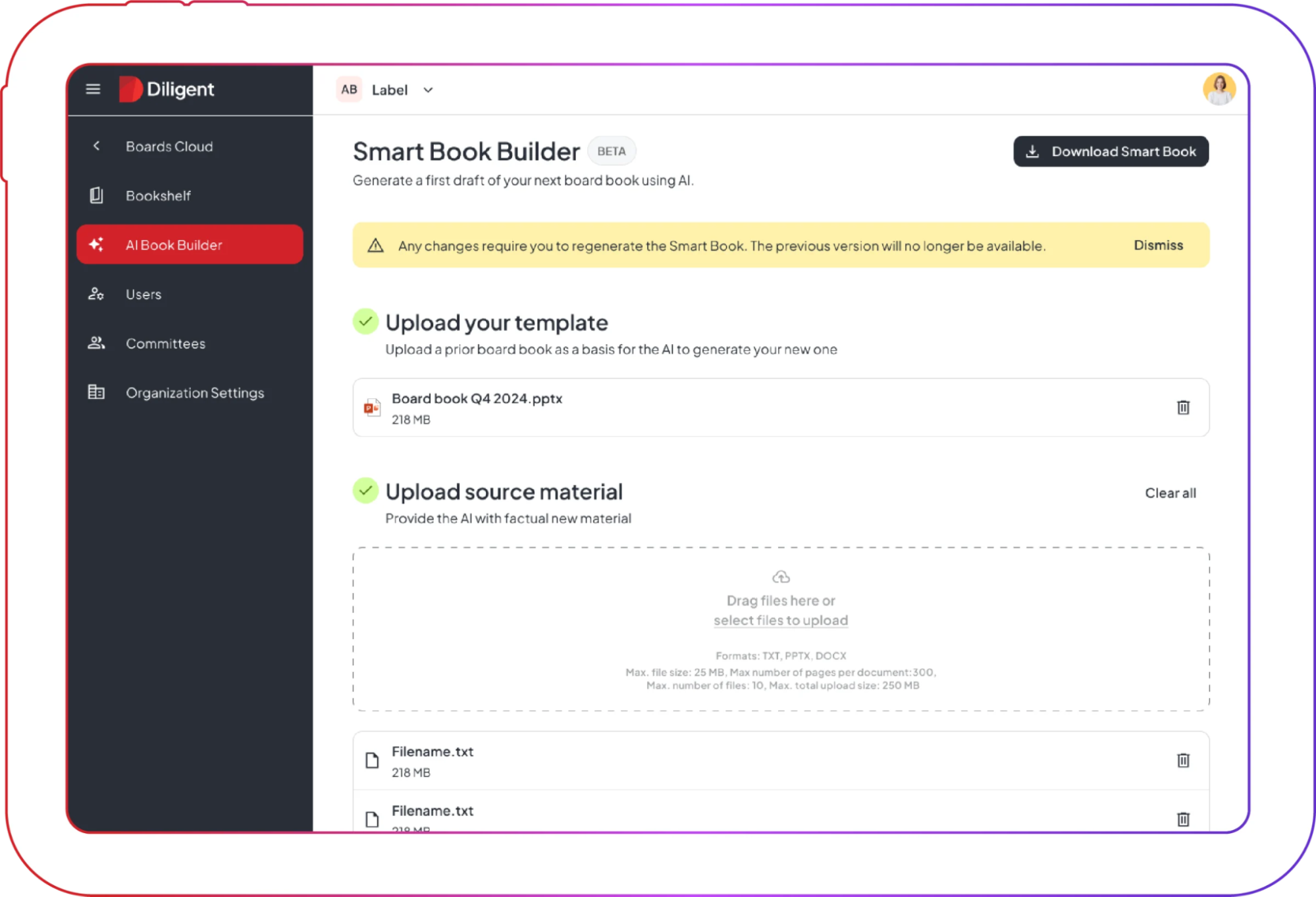
Quickly create elite board reports
Simplify and accelerate the board reporting process, from collecting key data and analysis to distributing completed reports.
Board reporting examples
A good board report offers the board both critical information at a glance and deeper narratives and data they can dig into over time. Board reporting best practices go a long way toward solid board reports, but your reports’ effectiveness has everything to do with the structure.
What a good report looks like will vary based on the type of report it is. Here is an example of what a board report can include based on a hypothetical organization:
| Contents | Details |
| Executive summary | CISO Update: Summarize the organization’s cybersecurity posture, including recent threat mitigation efforts, critical vulnerabilities addressed, and defense readiness. COO Update: Highlight operational performance, including production output, supply chain efficiency, and projected growth trajectory. Include any major operational milestones achieved since the last meeting. |
| Goals, objectives and KPIs | Revenue growth: Quarterly revenue trends compared to targets. Customer retention: Updates on churn rates and satisfaction scores. Operational efficiency: KPIs like production cost per unit or time-to-market for new products. |
| Graphics | Bar graphs showing quarterly revenue trends. Pie charts illustrating market share distribution. Line graphs tracking customer satisfaction over time. |
| Strategic insights | Explain trends in customer acquisition rates and their impact on revenue. Highlight supply chain disruptions and strategies for improvement. Discuss the implications of increased marketing spend on brand awareness and sales conversions. |
| Risks and opportunities | Risk: Supply chain vulnerabilities due to geopolitical tensions; proposed mitigation includes diversifying suppliers. Opportunity: Increasing demand for sustainable products presents a chance to expand into eco-friendly markets. |
| Compliance and governance | Recent audits or compliance checks completed successfully. Upcoming changes in industry regulations and their potential impact on operations. Actions taken to align with ESG (Environmental, Social, and Governance) standards. |
| Benchmarks | Highlight market share growth relative to competitors. Compare production costs to industry averages to identify inefficiencies. Benchmark customer satisfaction scores against industry leaders. |
| Recommendations | Increase investment in cybersecurity tools to preempt rising threats. Expand into emerging markets with a growing demand for the corporation’s products. Allocate additional resources to R&D for innovative product development. |
Board reporting template to adapt to your own organization
Use this template for your next board report:
| Contents | Details |
| Executive summary | Start by summarizing the most critical information. This should give boards a firm grasp of the key points without reading the full report. The details will vary from department to department. For instance, CISOs should ensure the board grasps their defense readiness at a glance. Meanwhile, COOs should provide a clear snapshot of the operational performance and growth trajectory. |
| Goals, objectives and KPIs | Recap the organization’s strategic priorities and include KPIs that reflect progress to help the board decide whether to stay the course or pivot. |
| Graphics | Graphs, charts and other visual aids should accompany the KPIs to help boards interpret and utilize the data more quickly. |
| Strategic insights | Teams should also interpret the data and visuals for the board. Explain what the raw data means and how the board should approach it. |
| Risks and opportunities | Then, move on to the risks the organization faces. Recap known risks, emerging ones and relevant strategies to mitigate them. Depending on your ERM strategy, also mention opportunities those risks may present. |
| Compliance and governance | Update the board on regulatory requirements and how effectively the organization complies with them. Be sure to include upcoming regulations the organization may need to respond to. |
| Benchmarks | Place the organization’s performance in the context of competitors. Understanding how competitors and other industry players are performing will help you see the external factors influencing performance. |
| Recommendations | The teams closest to risk and compliance may have a more concrete idea of how the organization should proceed. Based on the data and insights in the report, make recommendations for the board’s consideration. |
11 board reporting best practices
Organizations approach board reporting differently. A board report is a single deliverable that compiles insights on a given topic, such as environmental, social, governance (ESG) or human resources, into a single resource.
Countless employees at multiple levels will touch that report:
- Practitioners will prepare it
- The C-suite will guide the preparation
- The board will ultimately use it to make better decisions
Board reporting best practices are vital to creating board reports that check all those boxes. These include:
- Communicating clearly: The reports themselves should communicate essential information to the board. Delivering those reports also relies on clear communication. Develop a reporting structure that allows practitioners and the C-suite to create consistent reports and give the board quick access.
- Establishing a schedule: Board reporting is only valuable if it’s timely. Creating a reporting cadence gives stakeholders fresh insight into the organization’s performance and risk environment.
- Aligning reporting with organizational goals: Board reporting shows the organization’s performance against predetermined goals. Executives at the C-suite level should share the organization’s overarching goals and strategies with their teams so the reports articulate how business activities contribute to those objectives.
- Including key performance indicators (KPI): Relevant KPIs are another board reporting best practice teams can use to quickly and clearly communicate the organization’s performance in important areas. Boards can then quickly assess the metrics and any associated trends. Learn more specifics about board governance metrics.
- Outlining risk and mitigation strategies: Boards also need a clear understanding of the risk environment. This includes updates on known risks and forecasts on emerging ones. Pair each risk with a mitigation strategy the board can consider. This aids the board in making swift and informed decisions.
- Using visuals: Board members don’t need to be data analysts. Consider how to ensure they don’t need to do extra work to understand critical data and trends. Charts, graphs and more can help data lead to more productive discussions and faster decisions.
According to What Directors Think 2026 by Diligent Institute and Corporate Board Member, 42% of directors want fewer presentations and more discussion, a signal that visual summaries, not raw data dumps, are what boards need. For Inna Barmash, Chief Legal Officer and Corporate Secretary at Amplify, the problem was a common one: Every board member had a different idea of what "risk" actually meant. After an internal calibration effort, her first presentation to the board was little more than a list of risks — it was only when Barmash added a heatmap that the moment landed. "I could feel the board's sigh of relief," she said. "A heatmap is a communication tool.”
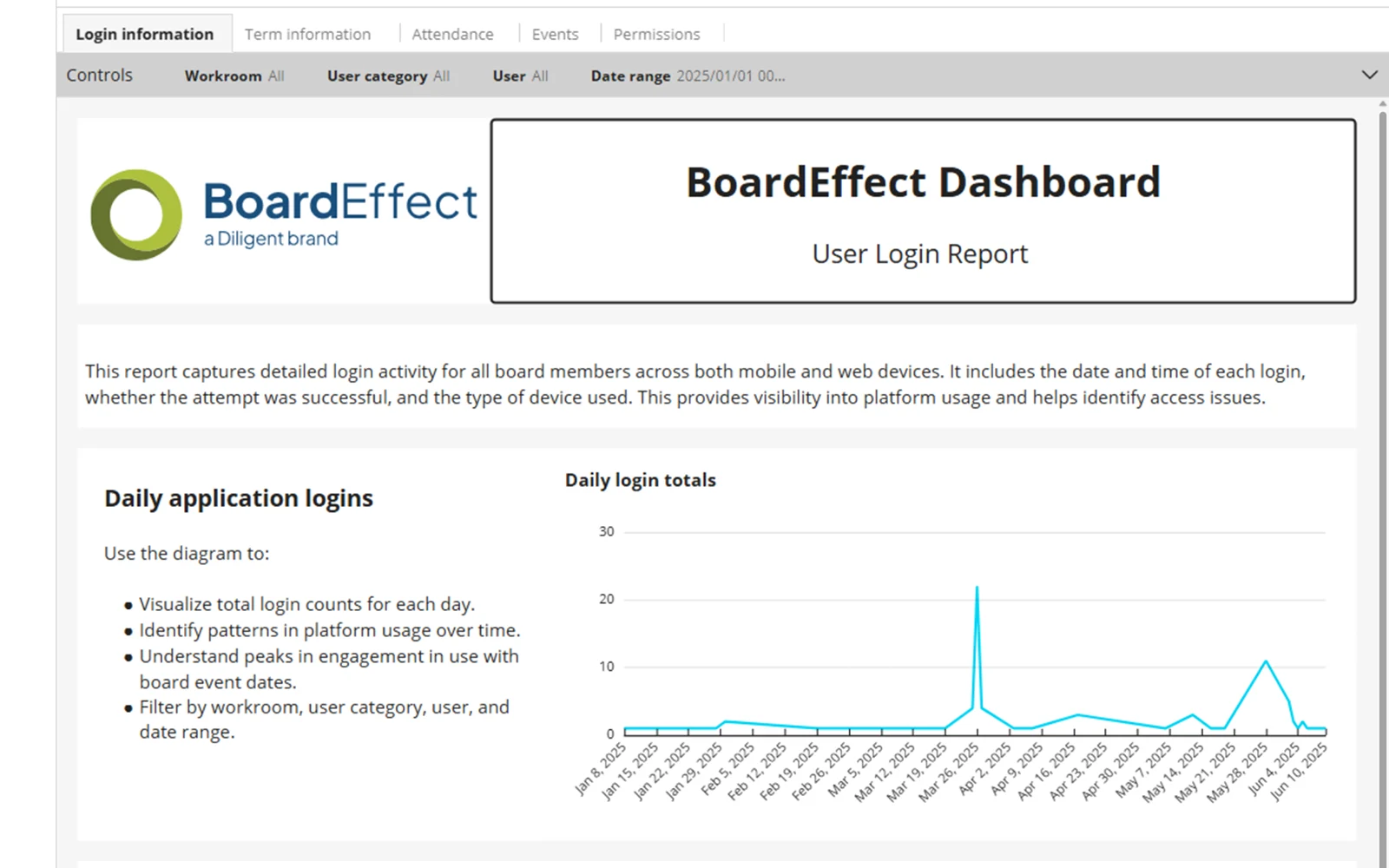
- Providing a narrative: Add narratives explaining the report’s data beyond visuals. Your team’s commentary is critical. Triple-check that the report is jargon-free (a simple but frequently forgotten step). Many people prefer to use software that supports both visuals and commentary. “We’ve actually asked our CEO to write a description of what we want to understand in this section to make sure we’re understanding what the key points are. It allows you to arrive in the room more informed and equipped to have a productive discussion and make better use of the time,” says Karen Francis, chair of the board at Vontier. Board reporting in this style helps board members and other stakeholders understand what the data means and any broader trends it represents. Like visuals, commentary is vital for helping your board make effective and timely decisions when it counts.
- Implementing a feedback loop: There must be a mechanism to communicate feedback on board reports. This should include a pathway for executives to comment on reports before presenting them to the board and a second pathway for the board to ask questions or offer recommendations. Collecting feedback supports continuous improvement. This feedback loop helps to support the top-down and bottom-up approach, a perspective that GRC analyst and pundit Michael Rasmussen shared in-depth with Diligent.
- Looking to the future: The best board reporting examines what’s ahead. Include a brief forecast and any recommendations so the board can anticipate what’s coming and prepare accordingly.
- Prioritizing data security: Board reports must be confidential. Ensure you’ve implemented strong security measures to guarantee that reports won’t fall into the wrong hands. This includes internal controls for preparing and handling reports and encryption for the tools you use to distribute and communicate. The WeWork vs Softbank lawsuit demonstrated how critical it is to evaluate communication methods and protect your board communications.
- Offering board reporting training: Executives are responsible for building teams that understand and can use board reporting best practices. Offer thorough onboarding and ongoing training to keep protocols fresh for new and veteran employees.
Common mistakes to avoid in writing a board report
Effective board reporting requires enough information for directors to act, presented in a format they can absorb. These are the pitfalls the C-level and their teams must avoid:
- Lack of clarity: Board reporting misses the mark when it’s too long or uses overly complex language. “Sometimes we just get snapshots of where we are right now and get pulled into meetings. That’s what’s difficult because you want to know if we are getting better or improving. That’s the important element to really analyzing the data.” Catherine Lego, Founder of Lego Ventures LLC and Board Director at Cirrus Logic and Guidewire Software. Strive to create clear and concise reports without leaving out critical information.
- Misalignment with organizational goals: Reports are challenging to act on when the narratives and KPIs don’t match the company’s direction. Ensure you create an explicit link between the information in your reporting and the organization’s goals.
- Inconsistent format: Boards will review an updated version of the same report many times throughout the year. If every GRC update looks different, quickly understanding and comparing the reports isn’t easy. A consistent framework makes report creation faster since teams can compile the same information every time.
- Unreliable reporting: Effective board reports depend on data. If your reporting is inconsistent, siloed, or sporadic, that data could be inaccurate by the time it reaches the board. Today, leaders with the most effective board reports use technology so the board always has fresh insights.
- Failure to collaborate: Your reports should spark ongoing conversation, whether feedback, questions or a discussion about possible solutions. For robust reporting, departments need to work together. The CEO, CISO, CFO, and COO should communicate to ensure a holistic view of organizational risk. Rather than using multiple tools for one-off siloed reports, what if your GRC software met your daily, weekly, quarterly, and annual needs? Your teams would have quality data at their fingertips. This ensures alignment with organizational goals, fostering effective board reporting. Simultaneously, the board accesses clear, insightful information crucial for strategic decision-making. Create a secure, integrated, and interactive environment to facilitate collaboration before, during and after board meetings.
Though board reporting comes in after your strategy, objectives and goals are in place, it deserves early attention. Board reporting best practices underpin everything that makes the board effective: proactivity and informed decision-making.
According to the GC Risk Index 2026 by Diligent Institute, only 19% of organizations have fully integrated GRC systems. And 67% of senior legal leaders report that their time spent coordinating enterprise GRC has increased year over year, meaning the manual stitching together of reporting inputs is getting harder, not easier. Map the data sources most often used in board reports and assign a single owner for reconciliation before each meeting so teams have a clearer path from siloed inputs to a board-ready view of risk, performance and compliance.
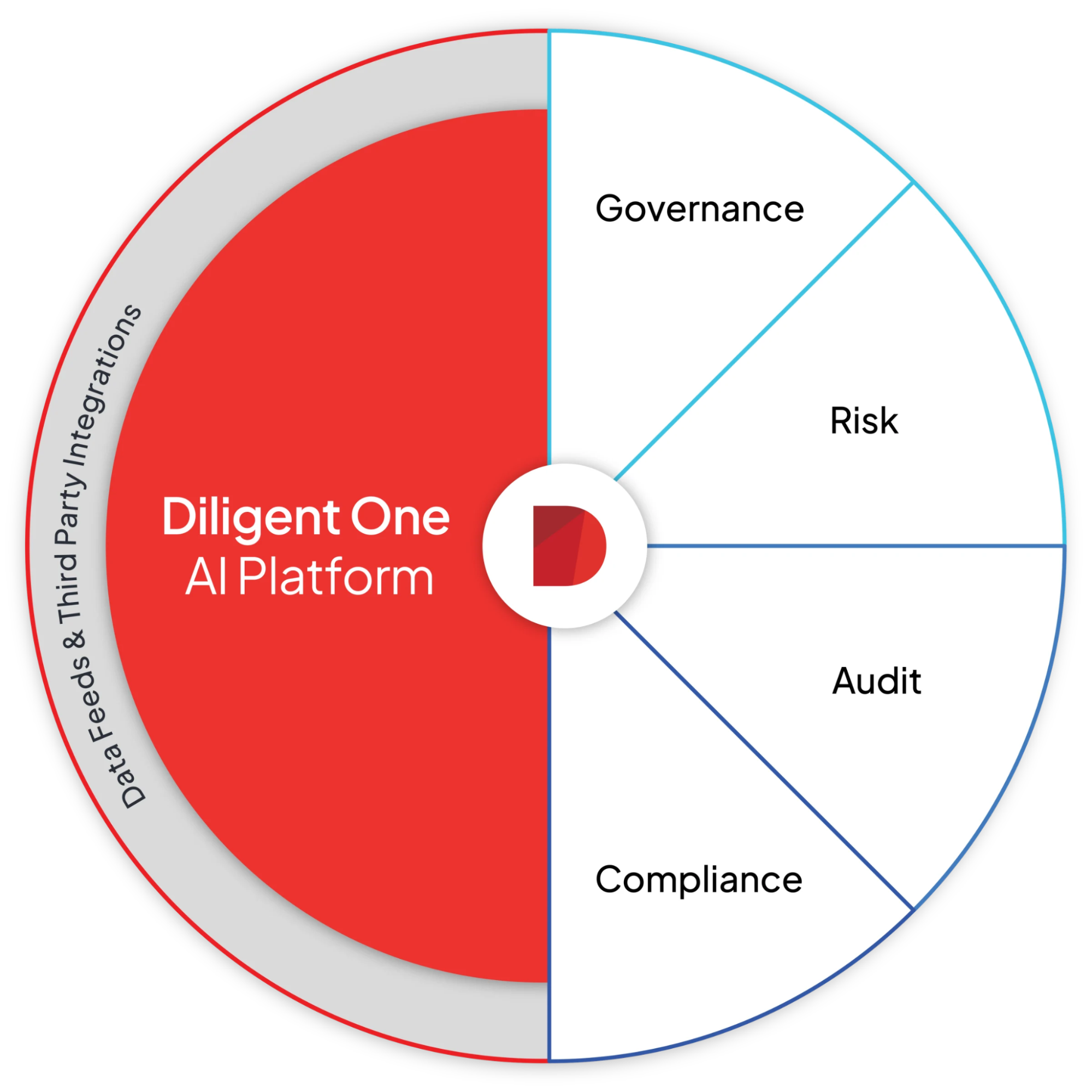
Integrated GRC gives boards complete data in an easy-to-view dashboard. It balances the need for deep insights that are also accessible. Consistent data powered by accurate analytics and cross-departmental visibility reduces the burden on both the C-suite and practitioners to complete the repetitive tasks board reporting requires. Those teams can be the experts and advisors they are and offer contextual analysis and insights.
The Diligent One Platform centralizes the entire GRC practice by:
- Channeling the power of Diligent Market Intelligence
- Connecting disparate internal and external data sources in a single dashboard
- Complementing your data with an analytics engine
- Consolidating your view of risk
Diligent Boards brings together the full reporting workflow, from drafting to distribution, through its AI-powered GovernAI capability set. More than 700,000+ board members and leaders across 130+ countries use Diligent to support their governance operations. For teams managing recurring reports, three GovernAI features address the most time-intensive steps:
- AI Smart Builder drafts recurring report sections and assembles board-ready materials directly from source inputs, eliminating the manual compilation cycle that consumes practitioner time before every meeting.
- AI Smart Book Summary distils long, practitioner-compiled inputs into the concise, analysable pages directors actually read, directly supporting the board’s preference for analysis over raw data presentation.
- AI Smart Risk Scanner reviews board materials before distribution to identify risky language and legal red flags, giving legal and governance teams a pre-publication check.
- AI Smart Prep generates pointed discussion questions with source citations so directors arrive prepared for substantive conversation rather than orientation.
Underlying all of this is the Diligent One Platform, which connects risk, audit, compliance and entity data into a single board reporting dashboard, providing the structural fix for the integration gap that currently affects 81% of organizations. When the data behind the report lives in one place, practitioners spend less time reconciling sources and more time providing the contextual analysis boards need.
Learn more about how better GRC starts with the Diligent One Platform.
FAQs
How can I structure my board report for maximum impact?
To structure your board report for maximum impact:
- Strike a balance of data and commentary.
- Include ample KPIs and accompanying visuals, then pair that with a narrative that explains what those metrics mean.
- Once you’ve settled on a structure, use it consistently so the board knows exactly what the report contains and can quickly digest it.
How can I ensure that my board report is concise but complete?
Aligning board reports with your organizational objective is the best way to ensure they’re concise and complete. Then, you can prioritize the insights, KPIs, and visuals the board will need to make informed decisions about those objectives.
How can I tailor board reports to different types of stakeholders on the board?
Tailoring board reports to different stakeholders on the board requires understanding each director, their priorities and responsibilities and their ability to interpret data. Create reports that support the board in defining the organization’s direction and provide that information in multiple ways, including raw data, visuals, and narratives, so all directors can engage with it.
How can I gather feedback from board members to improve future reports?
A platform that enables commenting and communication from board members can create a feedback loop. The board can access reports between meetings, add feedback, and even converse on a secure platform.
How can I ensure my board reports align with the organization’s goals?
Align your board reports with the organization’s goals by familiarizing yourself with the organization’s plan. With that as your foundation, you can identify and report on measures that reflect the organization’s progress against that plan. This also requires communication across departments before the board meeting as the plan will likely contain objectives for multiple business areas, including finance, risk and compliance, and cybersecurity, for example. Platforms like Diligent One can support communication across the entire C-suite.
What is board reporting for government organizations?
In government organizations, board reporting is preparing and presenting information to governing boards or oversight committees. Government board reports typically include compliance and regulatory updates, budget performance, policy implementation and more.
How can you ensure you’re always prepared for a surprise board meeting (and save time across all your reports)?
Practitioners can prepare and deliver board reports more quickly if your reporting interface is closely integrated with daily activities. Using a single platform for both board reporting and routine operations allows practitioners to easily access all the analytics they need and report back to the board. Practitioners can then report as accurately and efficiently for urgent meetings as they do for scheduled ones.
Many organizations manually pull data from multiple different sources. These sources don’t always align. That can make it difficult to articulate the relationship between one piece of data and another. Using one platform connects all data in a single dashboard, giving practitioners a clear view of cross-departmental data that can be tied clearly to organizational objectives.
What is board reporting for the education sector (is it different than for corporate)?
Board reporting for the education sector has some similarities to corporate board reporting. In the education sector, reports focus on areas like the institution’s mission and educational goals, student performance and curriculum and program updates.
Ready to transform your board reporting? Schedule a demo to see Diligent in action.