
This article originally appeared in our July 16th edition edition of the Diligent Minute Newsletter. For more insights like these, delivered straight to your inbox, subscribe here.
The Digital Trust Summit hosted by Global Data Innovation left me with something I haven’t felt at many AI conferences lately: optimism. For the past several years, too many conversations about AI have started and ended with fear. Yes, the risks are real. Yes, the stakes are high. But in Brussels, the tone was different. The focus wasn’t on whether AI is too dangerous to govern. It was on how to build the guardrails that let innovation move faster, more safely and with greater public trust.
That shift in tone mattered, especially because the summit, hosted in Brussels, came just ahead of the August 2 milestone when the EU AI Act goes into full effect. The setting underscored the moment: the event took place near the European Parliament and included policymakers, innovators, artists and even the co-authors of the Act. Yet what stood out most wasn’t a heavy-handed regulatory mindset. It was a serious effort to answer a more challenging question: How do we accelerate safe innovation rather than slow it down?
That’s why the European perspective deserves attention well beyond Europe. Roughly half the room was filled with Americans, including leaders from AI companies at the cutting edge of development, there to understand how to get this right. They weren’t treating guardrails as a tax on innovation. They were treating governance as part of the infrastructure organizations need to adopt and scale AI responsibly. One idea from the summit captured that spirit perfectly: using AI to help police AI misuse. Another was an emerging framework from RSL Media, which would allow developers to check whether content has the necessary consent before it’s used, much like standards that helped govern content distribution in earlier eras of the internet. These are exactly the kinds of practical mechanisms that can reduce harm while increasing confidence for companies, creators and consumers alike.
What I found encouraging was how pragmatic these conversations felt. The focus wasn’t on restricting AI's potential, but on helping organizations adopt it with greater confidence and accountability.
Dominique Shelton Leipzig, host and founder of the Summit and CEO of Global Data Innovation, put it this way:
“The time for theorizing is over. At Global Data Innovation, we translate the governance frameworks being built at the multilateral level into the architecture boards and operators need to act on them. Our Digital Trust Summit is an extension of that advisory work, connecting leaders with practical solutions, technology and access to regulatory decision-makers. Innovation does not scale at the speed of technology. It scales at the speed of trust.”
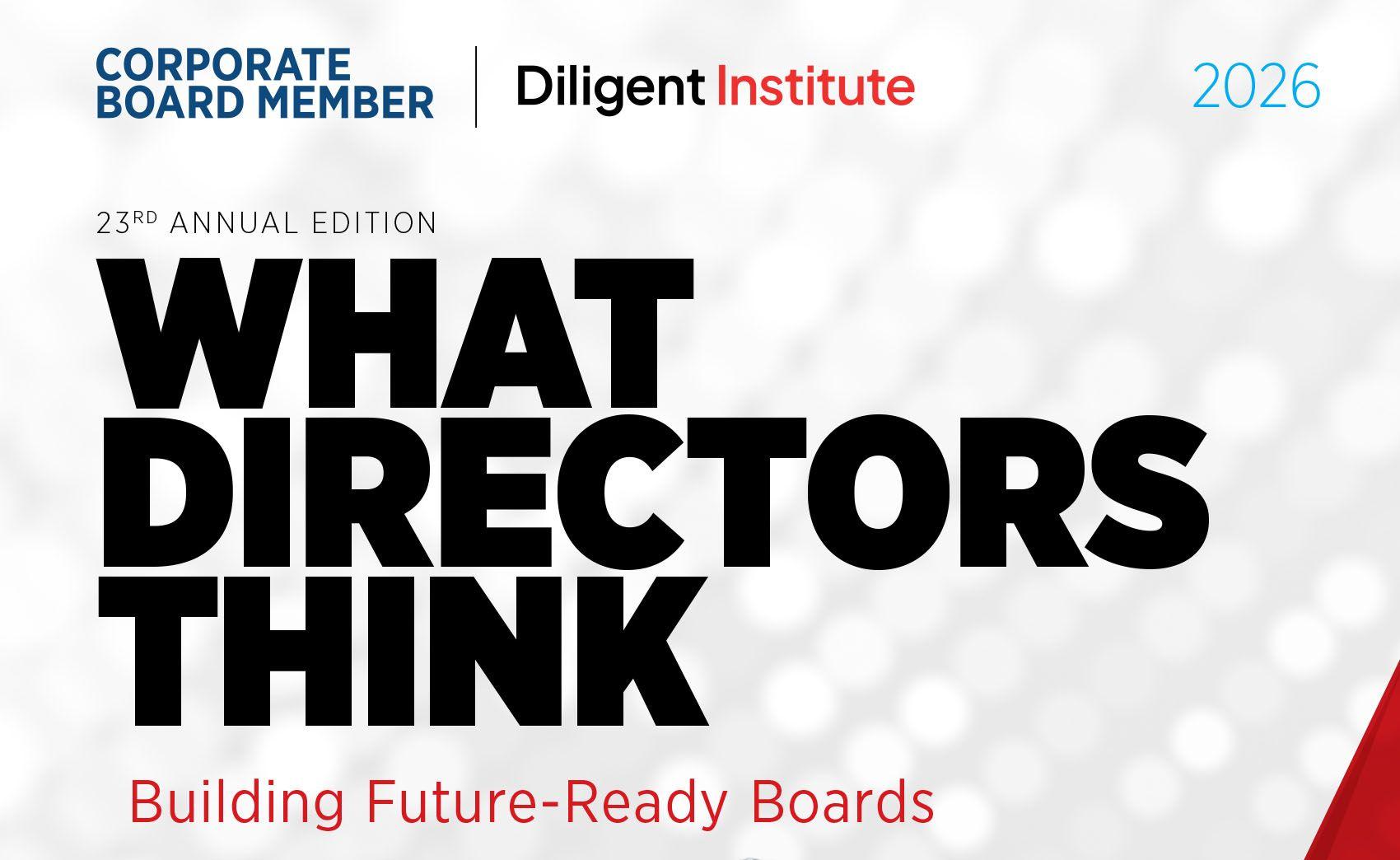
The conversation may have taken place in Brussels, but the implications reach much further. At the summit, we shared new research from Diligent Institute and Corporate Board Member showing that 82% of directors now use AI for boardroom purposes, up from 66% in fall 2025. But only about 30% of companies have an AI usage policy for the board. Directors are already experimenting with AI, learning from it and using it to support board work. In many organizations, however, it’s clear the governance around that usage is still taking shape. If the EU AI Act signals anything, it’s that governance can no longer be an afterthought. Boards don’t need to become AI engineers, but they do need clear policies, better oversight and tools designed for secure, transparent boardroom use. The future of AI will be shaped not only by what technology can do, but by whether institutions are prepared to govern it wisely. The Digital Trust Summit made one thing clear: trustworthy AI is possible. The challenge now is making sure governance evolves quickly enough to support the innovation already underway.
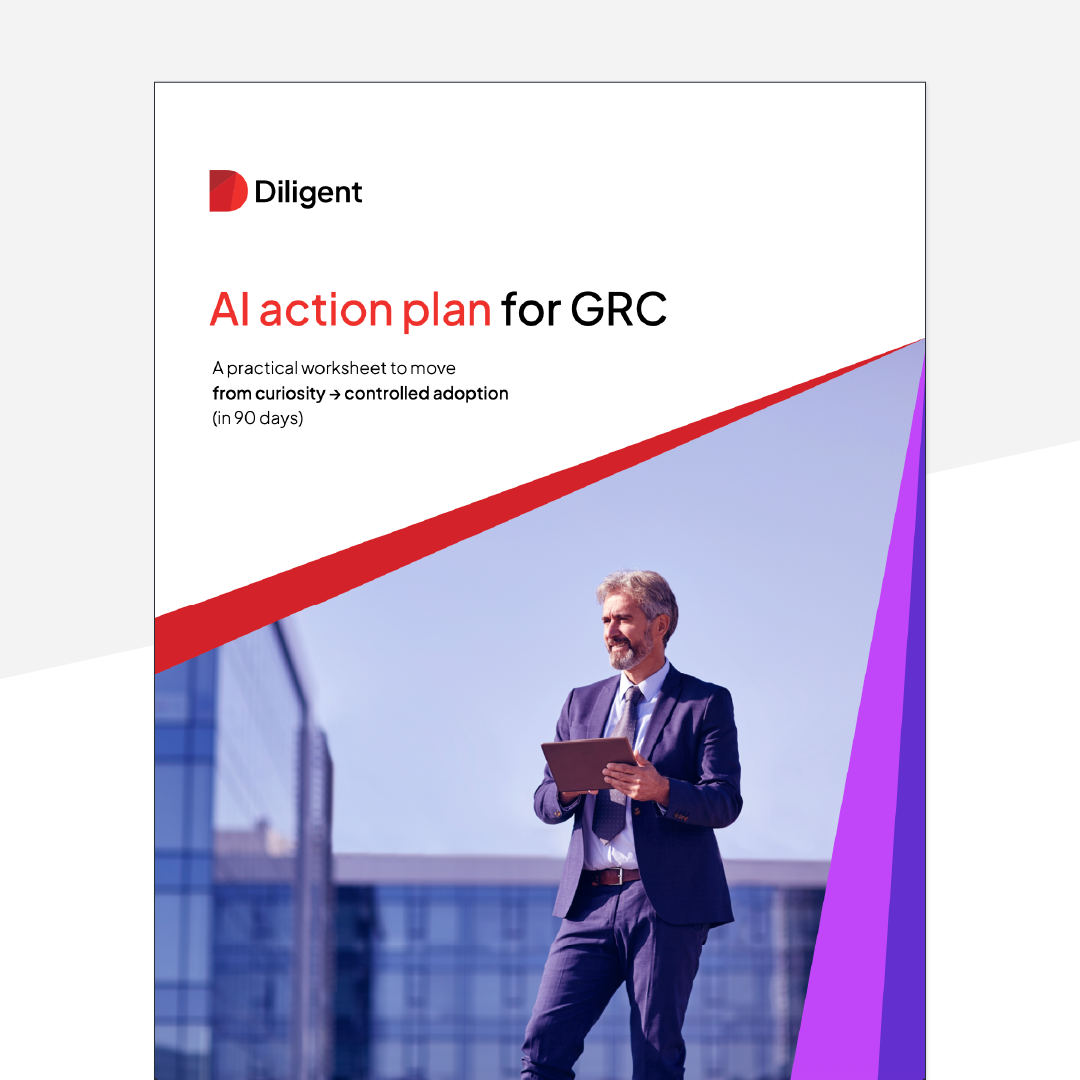
AI action plan worksheet for GRC leaders
Unlock the potential of AI in governance, risk, and compliance with this practical 90-day action plan worksheet designed for GRC leaders. This guide helps you assess AI maturity, prioritize use cases, and establish essential guardrails, ensuring a structured and accountable approach to AI implementation in your organization. Download now to transform AI discussions into a clear, actionable strategy.

From reactive to predictive: Board governance in the AI age

In this episode of the Corporate Director Podcast, guest host Nithya Das, General Manager of Governance and Chief Legal Officer at Diligent, sits down with Elena Hera and Kaitlin Betancourt, partners at Goodwin, to unpack how AI is reshaping board oversight, legal risk, and the tempo of governance. They explore what reasonably informed AI oversight looks like, how to build an effective AI governance framework, and why AI literacy and documentation are rapidly becoming table stakes for corporate directors.
From AI talk to real impact: How today’s leaders do more without adding headcount
Unlock the potential of AI in governance, risk, and compliance with our comprehensive guide. Learn how to streamline workflows, enhance reporting efficiency, and build a robust AI action plan while maintaining control and accountability. Download now to elevate your organization's AI oversight and drive measurable impact.